
Building the Bunk Tops
Progress on the aft section continues, with the bunk tops turning into a surprisingly time-consuming but important interior project. A look at design decisions, lessons learned, and what I would do differently next time.
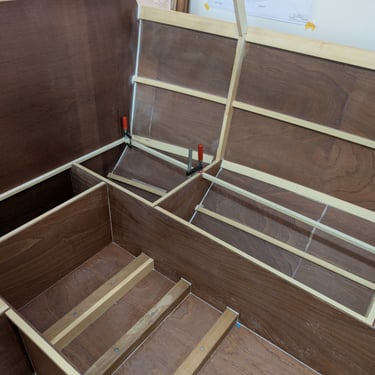
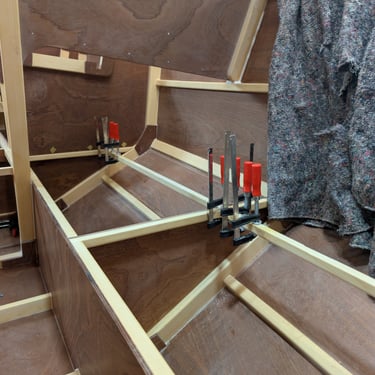
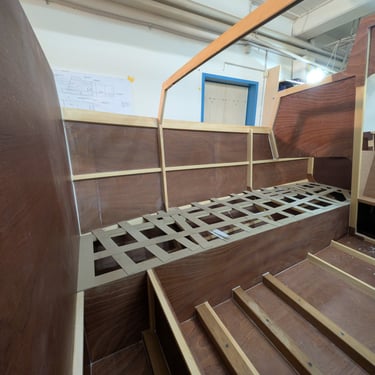
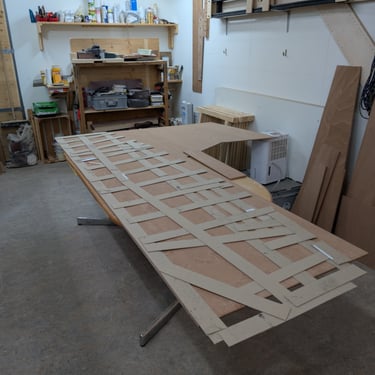
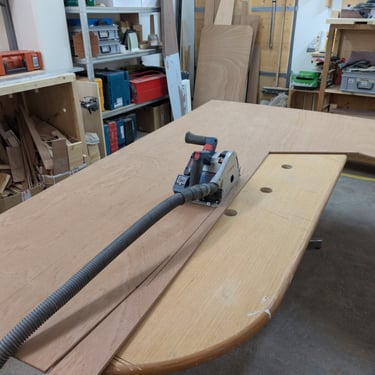
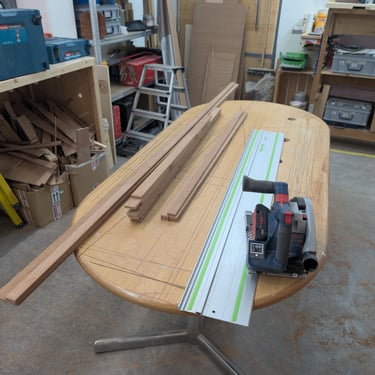
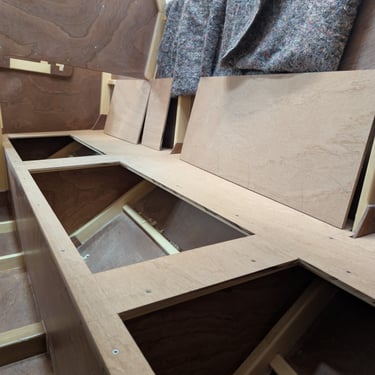
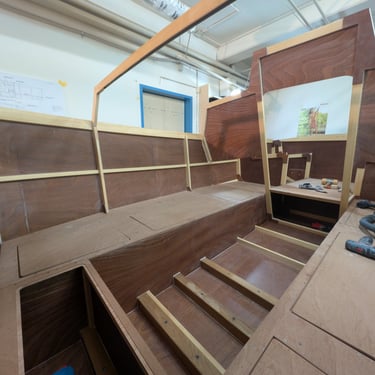
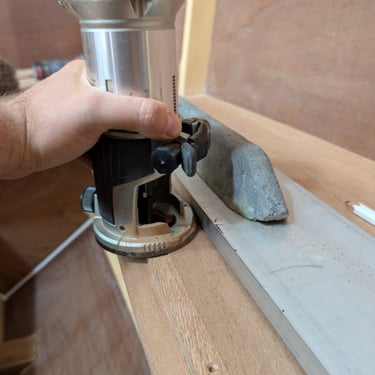
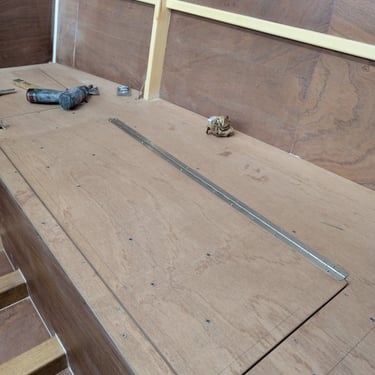
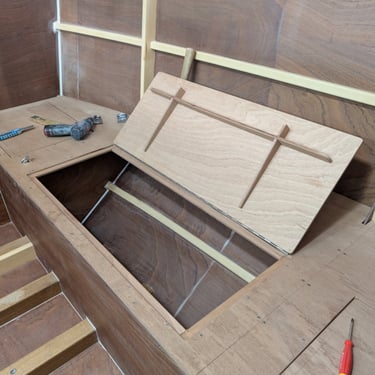
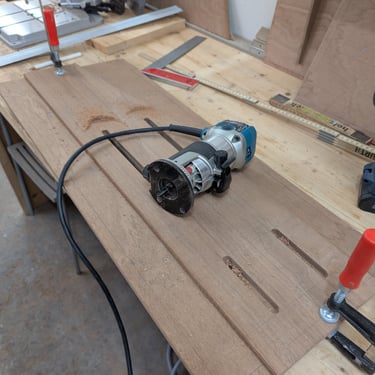
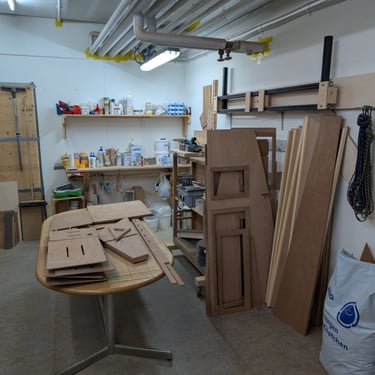
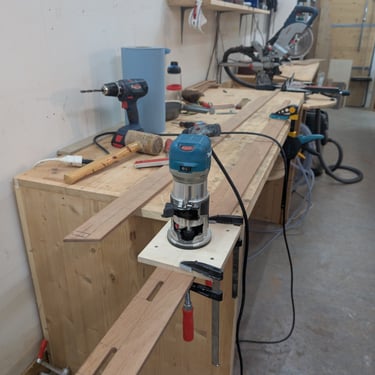
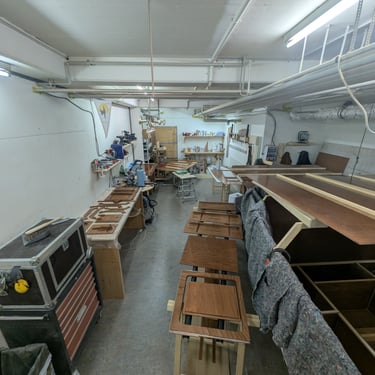
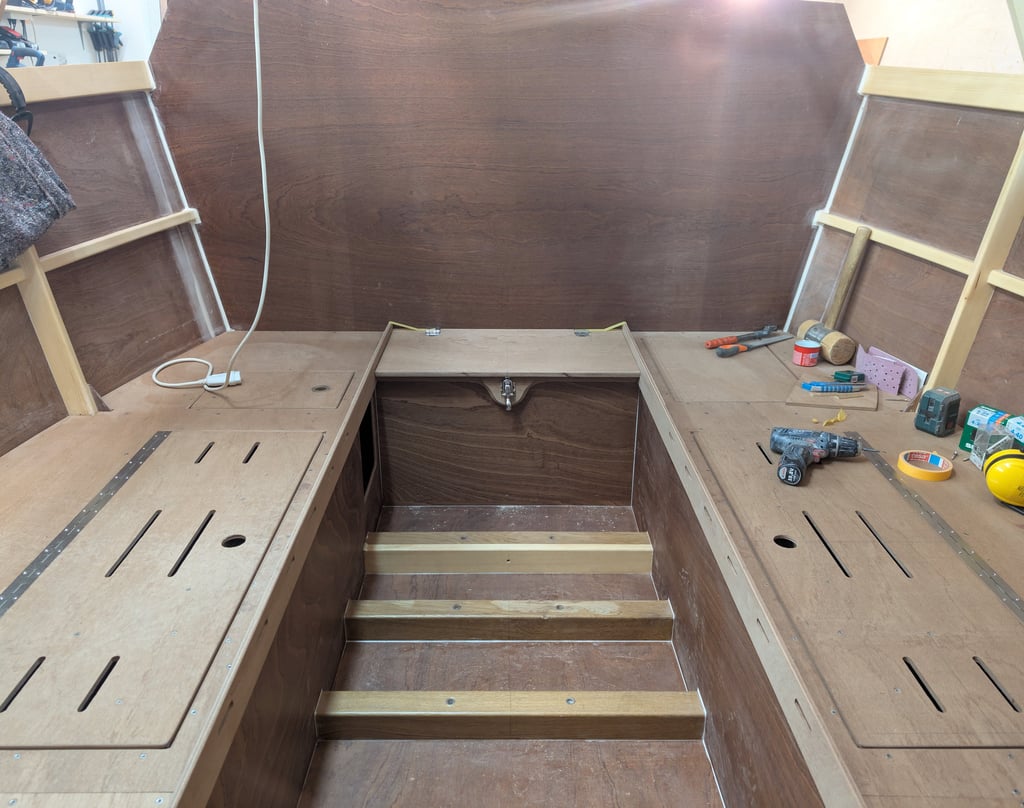
While work continued in the aft section of the boat—on the daggerboard supports and cockpit plating—I also started building the bunk tops. This part of the interior came with a few design decisions. I chose to build my own access hatches with integrated ventilation slots and took inspiration from Joe 165 by adding a continuous slotted guard along the inner edge of the bunks. Once I had settled on the size and depth of the hatches and had a rough idea of the backrest depth, I added another longitudinal brace to screw the bunk tops onto. This extra support not only stiffened the structure but also made templating the tops much easier.
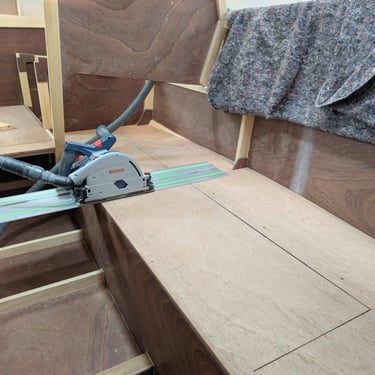
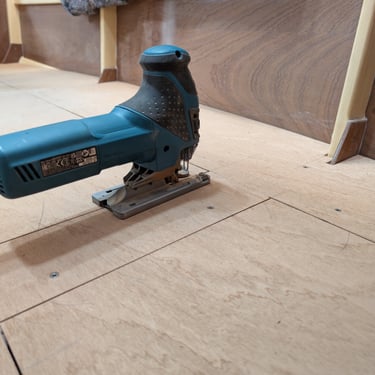
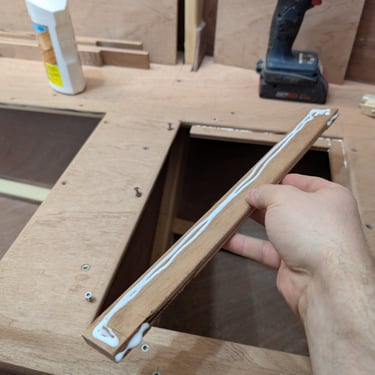
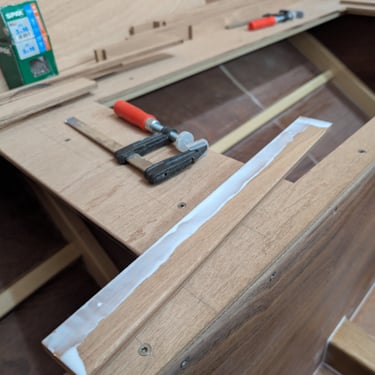
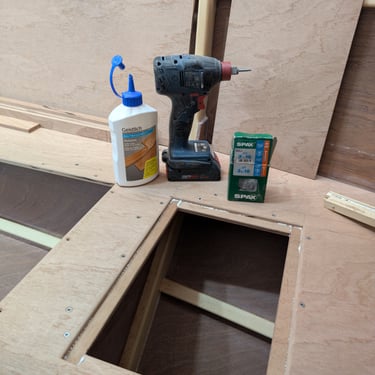
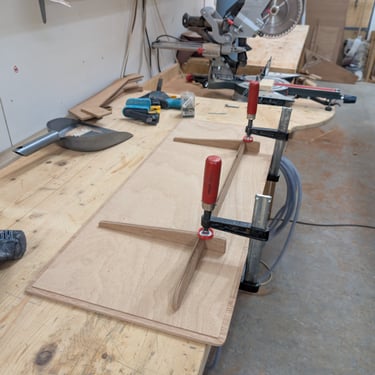
After templating, I cut the bunk tops from 8 mm plywood. In hindsight, I would recommend using at least 10 mm ply here, as it is more stable and gives more leeway for mounting hardware. I then cut out the access hatches using a plunge saw, finishing the corners with a jigsaw. Internal doublers were added so the lids had something solid to rest on. For these interior parts, I used D3 wood glue instead of epoxy. Strength-wise it is comparable, cold-water proof, and perfectly suitable for interior use. The main limitations are that it is not gap-filling and requires good clamping pressure—but for this application, it worked well and was easier to handle.
The hatch lids themselves turned out to be far more work than expected. From starting this project to having everything installed took close to four months, although other jobs—like filleting the interior and coating—were happening in parallel. Still, the method I chose for the access hatches was very labour-intensive. Using 8 mm ply meant adding extra braces on the underside to keep the lids straight and properly supported. While the result works, it’s definitely an area where I’d rethink the approach if I were starting again.
Tips & Things I’d Change Next Time
Use thicker plywood (10–12 mm) for bunk tops and hatch lids to reduce flex and simplify construction.
Consider hatch lids that cover the entire compartment rather than smaller individual openings.
Prefabricated access hatches might save a huge amount of time and effort.
Thin plywood requires additional bracing—factor this into your design early.
D3 wood glue is a good alternative to epoxy for interior parts, but only where tight fits and good clamping are possible.